A Biblical Perspective: Should Christians Do Yoga?
What’s Inside: Should Christians Do Yoga?” Discover why Christians should avoid yoga and seek spiritual practices that align with the Bible.
From sweaty studios to serene mountaintops, yoga has stretched its way into the hearts and hamstrings of millions worldwide. Everyone from soccer moms to CEOs are chanting “Ommmmm” faster than you can say “namaste.”
Christians, not to be left out of the bandwagon, have joined yoga classes and rolled out their mats with gusto. They’re downward-dogging their way to inner peace. It seems the body of Christ is getting quite the workout!
Should Christians Do Yoga?
As the incense smoke clears and the sound of Tibetan singing bowls fades away, a nagging question remains: Should followers of the cross be striking a pose on the yoga mat? Is this ancient Eastern practice a harmless way to touch your toes, or is it a slippery slope into so called spiritual limbo and a surefire way to entertain worshipping Hindi gods?
My heart in this article is to answer the question why Christians should not do yoga. My whole hearted response would be no. Christians and Yoga is like vinegar and water. They do not mix.
But before you get mad at me, and close this window, I ask that you prayerfully read the following article and consider it in light of what the Bible says. That’s all I ask. My following arguments are not just for the sake of argument. They are a the writings of a woman who grew up in the new age and is concerned for you and wants the best for you and your spiritual walk with the Lord.
(As an Amazon Associate I earn from qualifying purchases. See my full disclosure here.)
What Does the Word Yoga Mean in Hindi?
The meaning of the word yoga is to yoke, join and have union with something. Yoga is a Hindu word and the yoke spoken of is to Brahman, the Hindi form of God. According to Indian spiritual tradition, yoga is the practice of uniting the individual self (called the Atman) with the universal divine essence (Brahman).
The Origins of Yoga
This traditional form of yoga has ties to Hindu philosophy and spirituality, emphasizing the union of individual consciousness with the divine. There are different schools and styles of yoga, but all share the common goal of achieving spiritual enlightenment and self-realization.
Yoga has roots in Hindu spirituality and was designed for worship to Hindu gods and not exercise.
What Is The Overall Purpose of Yoga?
According to Aurawellnesscenter, “Yoga is much more than just a physical exercise routine. The overall purpose of yoga is to unite the mind, body, and spirit through conscious awareness and mindful practices. It is about connecting with yourself deeper by cultivating self-awareness, compassion, and inner peace.”
Yogis teach that yoga participants should activate the third eye chakra for clarity and purpose.
Yoga is intended to draw your energy inward. It is important to realize that yoga is not a neutral exercise. Yoga was made as a form of worship to Hindu gods. The foundation of yoga is spiritual and it cannot be separated from it’s intended purpose.
What Does Each Yoga Pose Mean?
Yoga Poses are not just stretching. Most yoga poses are worship to Hindi gods. According to Chopra, “the poses hold within them many profound symbols and metaphors that can bring more magic and meaning to every moment spent in that pose.”
In Hindi worship, yoga is seen as a way of connecting to, revering and paying respect to deities. Ekhartyoga says this about yoga poses:
They “represent not just what the deity looks like, but also everything they stand for. As we practice the posture, we put our focus on the energy and essence of the deity and look to embody their qualities.”
Should we as Christians look to unifying our minds with the same? His word says, “Let this mind be in you which was also in Christ Jesus:” It speaks of adopting the mindset and attitude of our Lord Jesus Christ.
Below you will find 6 yoga poses and their spiritual meaning according to yogis:
- The Padmasana (the lotus pose) is probably the most familiar of all yoga poses. It is used to attain an enlightened state of God consciousness to where humans are actually manifestations of God himself.
- The Vrikshashana (tree pose) is an act of devotion to the goddess Sita who was kidnapped by a demon king named Ravana. Yogis encourage devotees to imagine themselves as the goddess Sita and the tree itself.
- The Hanumanasana, (splits pose), is a posture of worship to Hanuman, the monkey god who is part human and part monkey.
- The Natarajasana (dancer pose) is a summons or incantation to the god Shiva who oversees the cosmic dance.
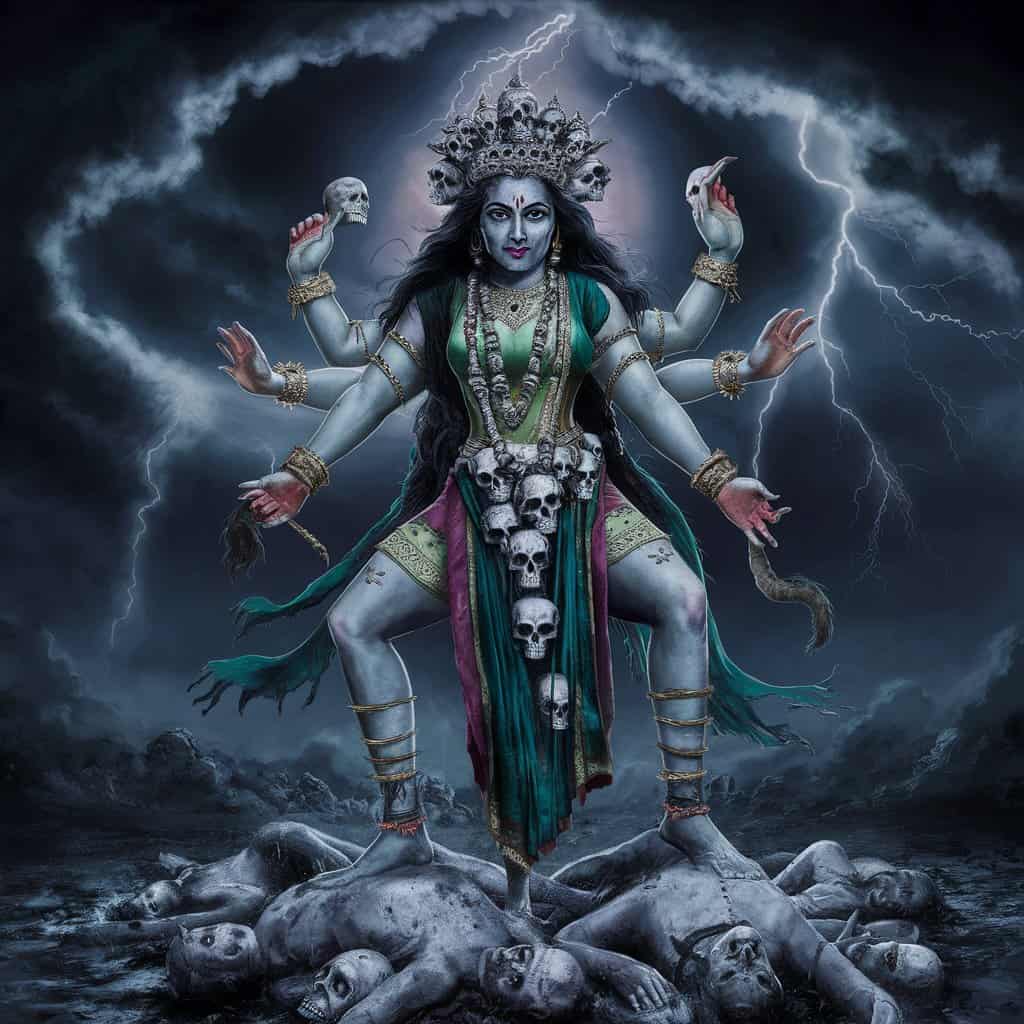
- The Utkata Kutsana (goddess pose) is a worshipful offering to the goddess named Kali. Kali has bloodstained fangs, a necklace of severed heads and she dances on corpses. Her multiple arms hold weapons and in many images her eyes are filled with rage.
There are more poses but these should suffice for now. Is this the type of exercise a Christian should participate in?
Common Arguments of Christians Who Do Yoga
There are many common arguments of Christians who do yoga. I’ll try and do a rebuttal for each argument to the best of my ability:
- “It’s just physical exercise, not spiritual practice.”
You can’t divorce the spiritual practice from the physical practice - “I can separate the physical aspects from the spiritual elements.”
Yoga’s roots in Hindu spiritual practices make it more than just a form of exercise. The poses and breathing techniques were originally designed to connect practitioners with Hindu deities and concepts that go against our faith in God. - “I can adapt yoga to fit Christian beliefs.”
Yoga’s goal of self-realization conflicts with Christian views on salvation through Christ. - “It’s beneficial for health and stress relief and health benefits.
Regular stretching is also good for the same. - “I use it as a time for Christian prayer and meditation”
Yoga meditation is vastly different than Biblical meditation on God’s word. You cannot comingle the two. - “Cultural practices can be redeemed for Christian purposes.”
That might be true in some cases but are not true when the fundamentals are diametrically opposed to the Bible. - “The Bible doesn’t specifically prohibit yoga” You are correct. The Bible doesn’t specifically say ‘thou shalt not do yoga’. But there are many examples of Israel following after pagan gods and the circumstances that followed. Even the New Testament warns of following after idols and their practices.
- “Yoga doesn’t conflict with my faith”
Yoga’s ultimate goal is achieving union with the divine or self-realization and contradicts with Biblical teachings about salvation through Christ alone. - “It’s no different from other forms of exercise”
Yoga differs from other forms of traditional exercise due to its spiritual and philosophical foundations in Hinduism. - “My intentions are pure”-
Let’s get real. The devil doesn’t care about your intentions. Even with your intentions, you are still worshipping other gods. The devil doesn’t care if you know what you are doing or not. He just wants you to do it. He is rejoicing when you do it. - “I can separate the exercise from the worship.
Yoga is a spiritual practice with physical benefits and not the other way around. Yoga and Christianity teachings do not mix. You can’t divorce the spiritual practice from the physical yoga practice.
Meditation and the Third Eye
Many yoga sessions have a portion of the third eye concept which is a form of meditation. The third eye is an unscientific spiritual idea that there is an invisible eye between the eyebrows. Participants will be told to ‘focus on the light inside of you’. The third eye is associated with intuition and higher consciousness.
Another form of meditation used in yoga is a “moving meditation” that combines physical postures, breathing techniques, and meditation. One of those meditational poses is called Shavasana, or “corpse pose” and is usually performed at the end of a yoga session. During Shavasana, students lie face up on the ground with their eyes closed and limbs spread out.
Biblical Meditation
The alternative to yogic meditation is biblical meditation that involves deep reflection on scripture and focusing on understanding and internalizing God’s word.
Are We the Israelites of the 21st Century?
As a Christian, I see a stark parallel between practicing yoga and the Israelites’ struggles with pagan worship. All throughout the Old Testament God warned the Israelites to stay away from the harmful practices of the pagan nations that surrounded them. Is yoga really any different today?
Just as the Israelites succumbed to the rituals and practices of Baal worship, I believe we face a similar challenge with yoga. God called them—and calls us—to undivided devotion. By participating in yoga, even unintentionally, we risk opening ourselves to spiritual influences contrary to our faith, much like the Israelites did when they mixed pagan practices with their worship of God.
We are called to be set apart, to find ways of caring for our bodies in a way that honors God. Can we still shrug our shoulders and do yoga knowing it’s purpose and history? Can we play with fire and not get burnt?

Related Post- Why I Won’t Be finishing “Jesus Calling” By Sarah Young
Potential Spiritual Dangers for Christians
- There are many severe potential spiritual dangers for Christians who practice yoga.
- Yoga opens your spirit to demon influences, even unintentionally.
- The meditative practices leads the participant away from focusing on Christ and towards a non-biblical form of spirituality.
- The concepts of self-realization and union with a universal divine, contradicts the understanding of salvation through Christ alone.
- Yoga introduces the participant to Karma and reincarnation.
- Yoga weakens Christian convictions and leads a person towards a more pluralistic or new age spirituality.
The Separation of Yoga and Exercise
Our body is the temple of the Holy Spirit, and we should be mindful of how we use it. While stretching and exercise are good, we must be discerning about practices that have deep ties to other religions.
Even if we intend to use yoga only for physical benefits, we may unknowingly be opening ourselves to spiritual influences that conflict with our Christian beliefs.
You would never consider going to worship at a Satanic temple/church, would you? Of course not. Why would you pose your body and dabble in something so extreme as the worshipping of other gods? And why would you use breathing techniques and chanting that are Hindu practices?
Our bodies and spirits belong to Christ.
What About Christian Yoga?
While I understand the desire to adapt yoga to be Christian yoga. we need to be very cautious about blending our Christian walk with yoga’s.
In chapter 6, Paul was speaking to the Corinthian church about idols when he said this in verse 16 and 17:
And what agreement hath the temple of God with idols? for ye are the temple of the living God; as God hath said, I will dwell in them, and walk in them; and I will be their God, and they shall be my people. Wherefore come out from among them, and be ye separate, saith the Lord, and touch not the unclean thing; and I will receive you,
Is there really any doubt as to why we shouldn’t be doing yoga? How can we justify it, knowing its history and purpose?
As followers of Jesus, we’re called to worship Him alone and to be set apart. Instead of trying to reshape yoga, I encourage you to explore the Biblical meditation and prayer, and do exercises that are free from being tainted with new age thinking. The Bible is clear and there is no spiritual ambiguity.
What Stretching Can I Do Instead of Yoga?
I would recommend you to do just stretch naturally. Move as your body would naturally move. Allow the Holy Spirit to dwell in you. Yoga involves certain sounds, certain chants and poses. Just don’t do those things.
In the words of Doreen Virtue, “Stretching is fine and normal and healthy. But each of the yoga asana poses glorifies one of the 330 million Hindu deities. You might argue that “God knows my heart,“ but it’s rebellious to engage in yoga. No other “sport“ has to put the name “Christian“ in front of it to try to justify it.”
Video Exercise Alternatives to Yoga
There are so many beautiful ways we can care for our bodies that align fully with Scripture. I’m excited to offer these exercise channels below that honor God without compromise.
- Christ Glorified has some regular workouts and non yoga stretching. Her mission is to build a community of like-minded women and inspire them to stay active for the Lord physical & spiritually.
- Essentrics has some non yoga stretching workouts and is the only technique that dynamically combines strengthening and stretching to develop a strong toned body with the complete ability of moving each joint and muscle freely and with full range of motion.
- Blessed Be Fitness has non yogic videos and her achannel is space for christians to get fit by God’s grace.
- Caitlin Englebert has many non yogic stretch videos on youtube.
Reading Resources about Yoga
If your looking for reading resources on why a Christian shouldn’t do yoga, please check out these resources:
- Breathe Deep…Now Hold It: Why Christians Shouldn’t Practice Yoga
- সন্দীপ, the Ex Hindu Facebook page
- Yoga and the Body of Christ: What Position Should Christians Hold?
- 24 Reasons to Avoid Yoga: If You Are A Christian
What Does the Bible Say About Yoga?
The Bible is our guidebook for all things in Christ. We should desire, as Christians, to follow it with all of our heart, soul and mind.
The Bible contains all we need to know to answer the question: should Christians practice yoga?
With that in mind, please do not skip over these Bible Scriptures. They are the timeless word of God that we can use even in our lives today. (All Bible passages are quoted from the KJV)
Scriptures About Yoga for a Christian
Guard against idols
- 1 John 5:21- Little children, keep yourselves from idols. Amen.
1 John 5:21 provides very clear instructions on on our approach to dealing with idols. This verse calls us to guard against idolatry in all its forms. The big question is… does yoga qualify as idolatry since it’s poses are poses formed to worship other gods?
I would venture to say yes.
Even when we approach it as mere exercise, we’re engaging in postures and techniques designed to connect with Hindu deities and concepts. By participating in yoga, we risk giving place to spiritual influences that compete with our devotion to Christ.
This verse reminds us to be vigilant and discerning, steering clear of practices that might compromise our faith, even unintentionally.
Come Out From Among Them
- 2 Corinthians 6:17- Wherefore come out from among them, and be ye separate, saith the Lord, and touch not the unclean thing; and I will receive you,
This Scripture says to “Come out from among them”.
What are we as believers supposed to come out from? Paul was exhorting the Corinthian church about maintaining spiritual purity and separation in the midst of idolatry and pagan practices. Paul told the church in Corinth to not be yoked together with unbelievers and their ungodly practices.
Why would we want to defile God’s temple? Why would we want to couple our temples to a worship of the Hindu deity? (Read 2 Corinthians chapter 6)
Do Not Bow Down to Other gods
- Deuteronomy 5:9- Thou shalt not bow down thyself unto them, nor serve them: for I the LORD thy God am a jealous God, visiting the iniquity of the fathers upon the children unto the third and fourth generation of them that hate me,
The verse specifically warns against idolatry and false worship. It’s not addressing physical exercise, but it is addressing practices of worshipping other gods or idols, which was a common issue for the Israelites at that time. Since yoga is posturing to idolatrous gods, why would a Christian do poses and chanting that are a worship to Hanuman, Siva and Kali- and many more gods?
The Abominable Customs of Other Nations
- Deuteronomy 18:9- When you enter the land that the LORD your God is giving you, do not imitate the detestable ways of the nations there.
This Scripture is a reminder to God’s people to as a warning against adopting practices from other cultures, with detestable ways. Yes, these verses specifically address Canaanite practices and not Eastern traditions like yoga, because the Canaanites were the pagans of the day. Bringing it to modern day- could yoga be the paganism that has crept into the church unaware?
No Other Gods Before Me
- Exodus 20:3- Thou shalt have no other gods before me.
Yoga has roots in Hindu spirituality and yoga practices involve poses dedicated to Hindu deities. Are you not acknowledging other spiritual forces?
Flee From Adultery
- 1 Corinthians 10:14- Wherefore, my dearly beloved, flee from idolatry.
Since yoga is a Hindu spiritual practices, and is a form of worship, isn’t it safe to assume that when a Christian does it, they are unwittingly participating in idolatry? Idolatry is idolatry is idolatry-whether intentional or unintentional.
But there’s a back story to this verse. Paul is addressing the Corinthian church’s questions about participating in pagan temple feasts and eating foods sacrificed to idols. Paul warns about the dangers of idolatry, using Israel’s history as an example.
- 1 Thessalonians 5:22- Abstain from every form of evil.
What if Yoga’s roots in non-Christian spirituality could be seen as an “appearance of evil”? Don’t you think practicing yoga might be misinterpreted by others as endorsing Hindu beliefs? Could you be causing other Christians to stumble as you participate? Possibly so.
The Importance of Guarding Your Faith
Our faith in Christ is precious and requires vigilant protection from influences that might lead us astray. Yoga, with its roots in Hindu spirituality, poses a subtle but very significant risk to our spiritual well-being.
Even when approached as mere exercise, its poses and philosophies can slowly infiltrate our thoughts and beliefs, potentially weakening our commitment to Christ. We must be discerning about the practices we adopt.
Guarding our faith means carefully evaluating any activity, recognizing it’s spiritual implications, and choosing to engage in things that align with our Christian beliefs. Includingnyoga. By doing so, we protect our relationship with God and ensure that our physical and spiritual practices glorify Him alone.
The Origin of Yoga in the Western World
In the 1920s-1930s: Paramahansa Yogananda, a yogi from India, began teaching in the US. In 1947, Indra Devi opened one of the first yoga studios in Hollywood. In the 1960s and 70s, popularity grew significantly during the counterculture movement. These events marked the beginning of yoga’s widespread adoption in Western culture.
As yoga gained popularity in America, particularly from the 1960s onward, its presentation began to change. The spiritual and religious aspects were often downplayed and the focus became the physical benefits like flexibility, strength, and stress reduction. This rebranding made yoga more palatable to a Western audience that sadly included many Christians.
Today it is portrayed as a neutral, secular activity – just another form of exercise. However, this marketing obscured yoga’s deep roots in Hindu spirituality and philosophy.
By presenting yoga as a physical exercise, it became easier for believers to engage in the practice without realizing its spiritual implications. It’s the perfect example of how subtle and sly foreign practices can influence our faith. Remember those stern warnings from the Old Testament about adopting customs of surrounding nations and from the New Testament about idolatry?
Why is Yoga a Sin in Christianity
You’ve heard the questions-
Is yoga a sin in Christianity?
Is yoga against Christianity?
Is Doing Yoga a Sin?
My simple answer would be yes simply for the reason that the practice of yoga is founded on hinduism and is meant for worshipping other gods.
If you disagree with me, I ask that you pray about it with an open mind and consider the Scriptures I have provided in light of it’s history. And, of course, I will be praying for you!
Conclusion: Should Christians Do Yoga?
If you’ve read this far- thank you!
Scripture instructs us to test everything and hold fast to what is good. (1 Thessalonians 5:21). When it comes to yoga, we must carefully examine its roots and implications through the lens of the Bible. Yoga’s inseparable connection to Hindu spirituality, its poses designed for worship of other deities, and its meditation practices that often conflict with Christian prayer, all raise significant concerns.
Is God calling you to roll up your yoga mat and draw near to Him in obedience?
As believers, our bodies are temples of the Holy Spirit, and we’re called to glorify God in all we do. Instead of adopting practices with spiritual roots contrary to our faith, we should seek ways to care for our physical and mental well-being that align fully with Scripture and deepen our relationship with Christ.
Sis, I encourage you to evaluate and reevaluate your viewpoint on the question: should christians do yoga? Let’s be wise stewards of our bodies and minds, always keeping our focus on honoring God in every aspect of our lives!